
OpenAI launched business profiles inside ChatGPT on November 10, 2026, and if your school or small business is not claimed there yet, ChatGPT is already describing you anyway, using whatever it can find. With 1.2 billion people using ChatGPT each week, that description is now part of how customers find you.
That is the news from OpenAI's announcement, "Introducing Businesses in ChatGPT." It is the biggest change to how small businesses show up online since Google Business Profile, except this one lives inside the answers people get from an AI chatbot.## What OpenAI actually launched
The launch has two parts, and both are in beta.
Business Hub is the profile itself. Through Business Hub, a business can claim its organization in ChatGPT and, once verified, update its key details and add self-service product feeds with pricing and availability. OpenAI says any eligible business located where ChatGPT is available can claim its business, and Shopify merchants can connect their store from Business Hub or the Shopify admin to speed up verification. Eligible products from Shopify merchants are already integrated into ChatGPT through Shopify Catalog.
Business Hub also shows insights. The dashboard reports aggregated insights into how people engage with a business in ChatGPT, including the number of mentions and website clicks it receives, plus discovery topics, the common themes across conversations where the business's website is cited. OpenAI is clear about the privacy line: it does not share users' conversations or Business Agent chats with businesses, and insights are aggregated and only available when there are enough conversations to meet certain thresholds.
Business Agents are the second part. After claiming a business, eligible organizations can build, test, and launch a Business Agent that answers questions and helps people explore what the business offers. When a business appears in a ChatGPT answer, a customer can click to see its profile and, if an agent is available, start a conversation with it. That conversation is clearly labeled, separate from the customer's original ChatGPT conversation, and distinct from ChatGPT's own independent answers. Businesses can also sponsor their Business Agent and use it as the destination for ChatGPT Ads, with sponsored placements clearly labeled and separate from ChatGPT responses.
At launch, Business Agents were limited to eligible ecommerce and online service businesses in the United States. Then on November 19, 2026, OpenAI updated the announcement: ecommerce and online service businesses based outside the U.S. are now eligible too. That nine-day expansion tells you how fast OpenAI is moving on this.
Why it matters: the answer box is the new front page
Most people still think about being found online as ranking on Google. But the habit has already shifted. People now ask ChatGPT to compare options, recommend a tutor, find a weekend class for their child, or pick a supplier, and they trust the answer they get back.
What most businesses get wrong is assuming ChatGPT knows them because they have a website. It builds its picture from whatever it can find: your website, listings, reviews, directories, and other people's pages. If your prices changed, or your old Facebook page still lists a phone number you no longer use, that stale information can end up in the answer a customer reads.
That is exactly why Business Hub matters. It is the first time a business gets a say in what ChatGPT says about it. Claiming a profile is the AI-answer equivalent of claiming your Google Business Profile: you correct the facts, you add your current prices and availability, and you see how often people are finding you. The businesses that claim early get to shape the description. The ones that wait get described by everyone else.
In my classroom and client work
I build websites for schools and small businesses in Bangkok alongside teaching ICT and robotics, so I read a launch like this with one question: what changes for the client after I hand the site over?
Here is a concrete example. A small business I built a website for in Bangkok gets most of its new customers from parents searching on their phones. A parent might ask ChatGPT for a weekend activity for their child, or a nearby service with good reviews, and the answer will mention a handful of businesses. Before November 10, my client had no control over what ChatGPT said about them in that moment. Now they can claim the profile, make sure the website link, description, and prices are current, and see whether people are clicking through to the site.
The same applies to a school. Parents already ask AI tools which school offers robotics, or which school has weekend classes. A school website I built is the source ChatGPT should be quoting, and Business Hub is where the school makes sure the quote is right. It costs nothing to claim, and the fix it offers, accurate information in the answer, is the same fix I have been doing on Google Business Profile for years. The channel changed. The job did not.
Steal this: five steps to claim your profile this week
You can do this in an afternoon, and step one takes ten minutes:
- Search for your business in Business Hub. Open Business Hub from the ChatGPT sidebar and search for your business by name. If a listing already exists, claim it. If it does not, check that your website is live and listed, because at launch only businesses with a website can claim.
- Verify ownership. OpenAI verifies that you are authorized to manage the business, and the process runs through its verification partner. Shopify merchants can connect their store to streamline it. Do this first, because nothing else unlocks until verification clears.
- Fix the facts. Update your website link, description, category, logo, and delivery and return policies. Check every line against your own website, because OpenAI reviews changes before they go live, and updates take time to reach profiles and answers.
- Add a product feed if you sell things. A self-service product feed with pricing and availability means ChatGPT quotes your current prices instead of guessing from an old web page. If you run a Shopify store, connect it and let the catalog do the work.
- Check your insights once a month. Look at mentions, website clicks, and discovery topics over the previous 28 days. If people keep asking about a service you no longer offer, your profile needs updating. If they keep asking about one product, feature it more prominently on your own website.
The honest caveat
I verified every fact in this post against OpenAI's own announcement, read today, plus TechCrunch's launch-day reporting. But this is a beta, and OpenAI is open about that. Claiming a profile does not guarantee higher placement or more sales, and OpenAI says so plainly. The insights are aggregated and only appear once activity passes privacy thresholds, so a small business may see very little data at first. And the rules are still moving: Business Agents only opened to businesses outside the U.S. on November 19, nine days after launch, so eligibility and features will keep changing. Treat Business Hub as control over your facts, not a ranking boost.
Is your business already showing up in ChatGPT answers, and do you know what it says about you?
Sources: OpenAI, Introducing Businesses in ChatGPT — originally published November 10, 2026, updated November 19, 2026 — openai.com/index/introducing-businesses-chatgpt. Launch reporting: TechCrunch, OpenAI rolls out new business profiles, making ChatGPT just a little bit more like Google, November 10, 2026 — techcrunch.com/2026/11/10/openai-rolls-out-new-business-profiles-making-chatgpt-just-a-little-bit-more-like-google.
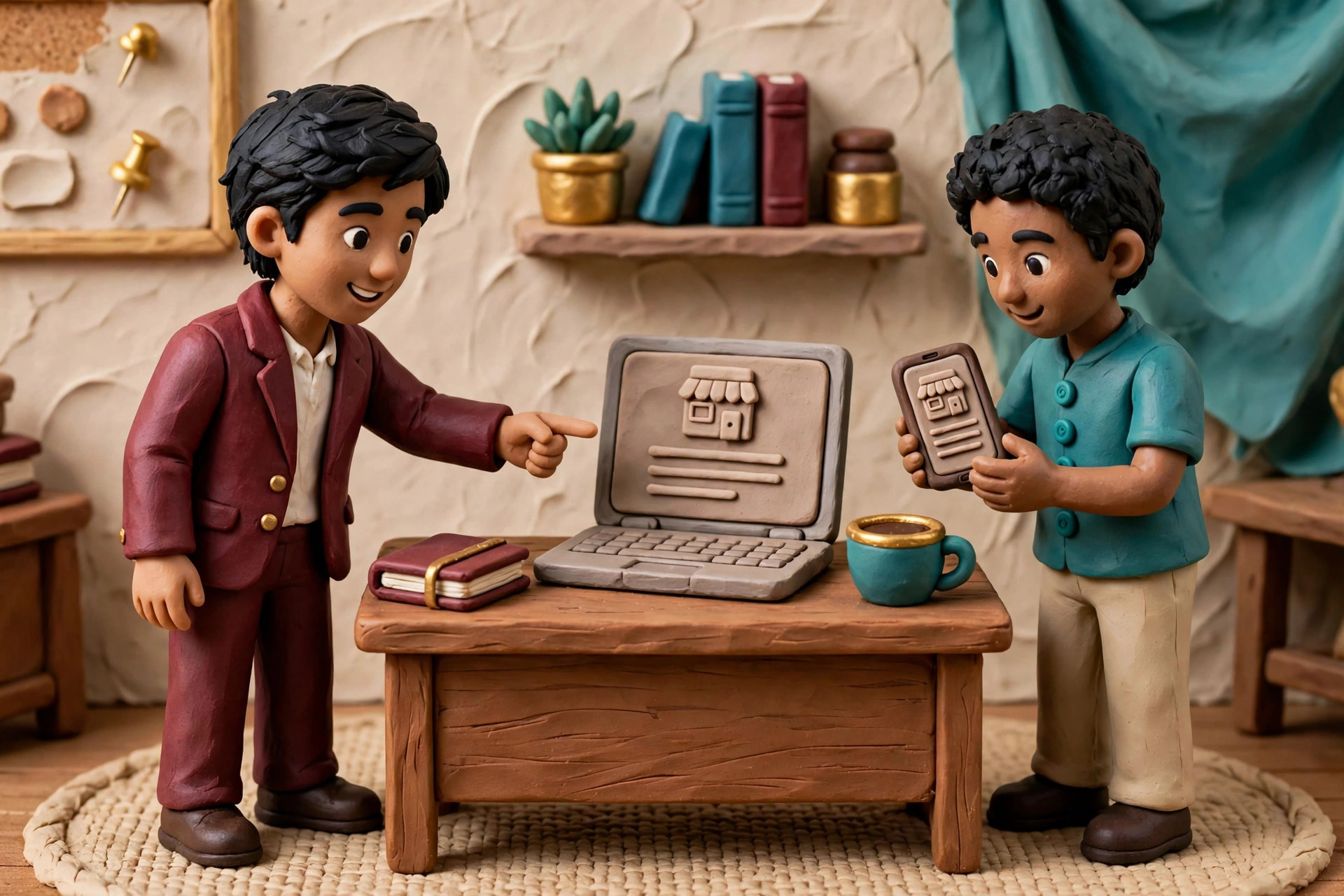
Title image: original clay artwork created for this blog.